The Dish

Saturday, December 16, 2006
The Senyru Chain
Enjoyment(Crop-Over)
People jam hopping
on the Spring Garden highway
like masked grasshoppers(Fish Festival)
Folks from Oistin come
to celebrate gainfully
their sea voyages
© Paterika Hengreaves
May 2003/Atlantic Shores, Barbados
-------------------------------------------------------
Change
Naked as a babe
to fall and to rise again
clad in robes of spring
Protest
(Foreshore and Seabed)
The tribe of Maori
takes a stance on the shoreline
watching the seabed
© Paterika Hengreaves
July 2004/Hibiscus Coast, New Zealand
-------------------------------------------------------
Remembrance
The quest is over
in peace the silent heart beats
on for-get-me-not
Desperation
Dancing beaver takes
two steps backwards and trembles
standing for your vote
Disgrace
Smiles spring from faces
true colours show with the fall
leaves a pretty mess
Gossip
Those fiery tongues
stroke hidden wild winds that blow
grape vines creep on the trellis
Cognition
Sea bed of knowledge
swim deep to harvest all sorts
in the sands of time
Contemplation
The world is my muse
fodder for a feeding brain
reservoir of thoughts
Wealth
My thoughts are riches
the mint of my memory
how can I be poor?
Selfishness
You want a review
of verses, rhymes and poems
golden rule ignore
© Paterika Hengreaves
2006/Ohio, USA


RICTAMETER
Author's Comments
A Rictameter is made up of nine lines in each stanza with the following syllabic count:
1 -- 2 syllables
2 -- 4 syllables
3 -- 6 syllables
4 -- 8 syllables
5 -- 10 syllables
6 -- 8 syllables
7 -- 6 syllables
8 -- 4 syllables
9 -- 2 syllables (are the same as line 1)
The modified version of the Rictameter is known as the Rictameter Swirl. This is created by changing the first and last line, stringing these together similar to the Cinquain Chain or Swirl, or a combination of both.
The following poems serve as examples:
Christmas (Rictameter)
Christmas Time Again (Rictameter Swirl)
I hope you find much pleasure in reading them
Do have a
MERRY
MERRY
CHRISTMAS!
A Rictameter is made up of nine lines in each stanza with the following syllabic count:
1 -- 2 syllables
2 -- 4 syllables
3 -- 6 syllables
4 -- 8 syllables
5 -- 10 syllables
6 -- 8 syllables
7 -- 6 syllables
8 -- 4 syllables
9 -- 2 syllables (are the same as line 1)
The modified version of the Rictameter is known as the Rictameter Swirl. This is created by changing the first and last line, stringing these together similar to the Cinquain Chain or Swirl, or a combination of both.
The following poems serve as examples:
Christmas (Rictameter)
Christmas Time Again (Rictameter Swirl)
I hope you find much pleasure in reading them
Do have a
MERRY
MERRY
CHRISTMAS!
Christmas Time Again
(Rictameter Swirl)
Christmas
Comes once a year
For Christians everywhere
Celebrate the Nativity
And Jews blend well with their Hanukka too
Lots of wishes and blessings flow
From the hearts and the soul
Should continue
All year
We wish for you
The joys the New Year brings
And resolutions we will made
Springs of hope revitalizing the mind
The gift of love hangs on the Cross
Easter He arose gave
The Blessed gift
Bestowed
©Paterika Hengreaves
December 15, 2006/Ohio, USA

Thursday, December 14, 2006
THE QUATRAIN
Author's Comments
Oh, there are so many different types of Quatrains. These are some of the names that readily come to mind not listed in alphabetical order:
The Introverted:
A quatrain having an enclosed rhyme which has abba rhyme scheme. The Introverted Stanza may also be called envelope rhyme since the rhymes of the first and last lines enclose the other lines.
Ballad Meter:
Alternating lines of iambic tetrameter and iambic trimeter, with the last words of the second and fourth lines rhyming, an abcb rhyme scheme.
Curtal Quatrain:
A quatrain in which the fourth line is shortened
Common Measure (C.M.):
An iambic stanza form similar to ballad measure. It is a quatrain in alternating iambic tetrameter and trimeter with rhyme scheme abcb. To put this differently, C.M. consists of four iambic verses making a stanza, the first and third having each four feet, and the second and fourth each three feet.
Curtal Long Hymnal Stanza:
A stanzaic form composed of three lines of iambic tetrameter and one of iambic dimeter rhymed abab.
Envelope Stanza:
Quatrain rhymed abba. The Redondilla is an example
In Memorium Stanza:
An envelope stanza (rhymed abba) in iambic tetrameter
Long Hymnal Stanza:An iambic stanza form similar to ballad measure. It is a quatrain in alternating iambic tetrameter and trimeter with rhyme scheme abab. A slight variation on Common Measure.
Long Measure (L.M.):
Quatrains in iambic tetrameter with ryme scheme abcb. To put this statement another way, L.M. consists of iambic verses of four feet each, four verses usually making a stanza.
Quaternion:
Of English origin, it is a 12-line 3-quatrain poem with fixed rhyme scheme. Rhyme scheme set at aabb ccdd abcd.
Short Meter (S.M.):
Iambic verses, the first, second and fourth having each three feet, and the third four feet. The stanza usually consists of four lines, but is sometimes doubled.
Redondilla:
This Spanish verse form is written in tetrameter in which each stanza consists of four lines, each with eight syllables and with any of these rhyme schemes: abba, abab or aabb.
Rubaiyat (Rubaa-ey)
This is the Persian word for quatrain and is a collection of poems attributed to the Persian mathematician and astronomer, Omar Khayyam (1048-1123). The rhyme scheme is aaba, that is, lines one and two and four. In longer poems built in rubaiyat rhyme scheme, the connection is sometimes extended to AABA BBCB CCDC, and so on. This is sometimes called, naturally, "interlocking rubaiyat." The structure can be made cyclical by linking the unrhymed line of the final stanza: ZZAZ. A pure use of the interlocking rubaiyat in Modern English poetry is Robert Frost's poem, "Stopping by Woods on a Snowy Evening."
Heroic Stanza:
A quatrain consisting of two heroic couplets written in an elevated style; the rhyme scheme is abab. The heroic couplet consists of two rhymed linesof iambic pentameter and written in an elevated style.
Pantoum:
The Pantoum is composed of a series of quatrains, the second and fourth lines of each stanza are repeated as the first and third lines of the next.
This pattern continues for any number of stanzas, except for the final stanza which differs in the repeating pattern.
The first and third lines of the last stanza are the second and fourth of the penultimate, the first line of the poem is the last line of the final stanza, and the third line of the first stanza is the second of the final. Ideally, the meaning of lines shifts when they are repeated although the words remain exactly the same: this can be done by shifting punctuation, punning, or simply recontextualizing.
There is the Imperfect Pantoum, in which the final stanza differs from the form stated above, and the second and fourth may be different from any preceding lines.
Venus and Adonis Stanza:
A stanza consisting of iambic pentameter quatrain and couplet with the rhyme scheme ababcc. The stanza was so called because it was used by William Shakespeare in his poem, "Venus and Adonis" (1593). Its form is like the structure for the Sesta Rima which is a six line stanza composed of a quatrain and a couplet and rhymed ababcc.
Kyrielle:
This is a Medieval French form written in rhyming couplets (though often arranged in quatrains) and featuring repeated lines or refrains. An example of a Kyrielle is Thomas Campion's poem, "A Lenten Hymn." These are some of the possible rhyming schemes for Kyrielle constructed in quatrains, aabB, ccbB and abaB, cbcB (uppercase letters signify the refrain). In the original French Kyrielle, lines were generallly octosyllabic. In English, the lines are generally iambic tetrameters.
Octameter in poetry is a line of eight metrical feet. It is not very common in English Verse. See example below
Trochaic: "The Raven" by Edgar Allan Poe
Dactylic: A.C. Swinburne's poem, "March: An Ode."
Nostradamus prophetic quatrains:
The Frenchman, Michael de Nostredame (December 14, 1503 - July 2, 1566) wrote in quatrains published in his book titled "Les Prophetics" (The Prophesies). This book contains his collection of major, long-term predictions. The quatrains featured both rhymed and unrhymed verses.
Shichigon-Zekka:
This is the Japanese term for a poetry verse form (often of Chinese origin) consisting of four phrases each seven Chinese characters (kanji) in length. This is the most common form of classical Chinese poems (kanski) and the standard form of Shigin (Japanese chanted poetry).
In composing Shichigon-Zekku, the character of the phrases (Zekku) is important. The rule is as follows:
First phrase (Kiku): Depiction of the scene
Second phrase (Shoku): Add further illustration and detail to the Kiku
Third phrase (Tenku): By changing the scene of the action, reveal the true essence of the poem
Fourth phrase (Kekku): In assimilating the tenku draw together and complete the poem
The Japanese terms mean literally: bringing into being, understanding; changing and drawing together.
As can been seen, the Quatrain is the most popular stanzaic form. It must consists of four (4) lines usually in a rhyme scheme of abab or in any of the following variants:
aaba
aabb
abba
aaba
abcd
The significance of the quatrain lies in the fact that it can be easily memorized because it contains only four lines of verse. It is intimately concerned with feelings. It‘s like a short story by which the poet can express thoughts easily.
All the stanzas in the poem, "The Westerlies" are quatrains. Click on the link below or at right to read the poem in its entirety. Your comments are appreciated greatly.
The Westerlies

Unpredictable when ever they stir
For sure these Westerlies know how to blow
These "forties" roar in southern hemisphere
At a wink their eyes change style as they flow.
They change their names in the northern hemisphere
At any time they strut their stuff each day
They fly across the Tasman Sea down here
They prance over huge terrain in their way.
Many names for Westerlies do abound
They spin from the west then twirl and then nest
In the Auckland Harbour they can be found
Circumpolar whirl that name is the best.
It's October and spring still in the air
Waitemata Harbour thinks it's too long
Windsurfers sail the sky this time of year
In Orewa Westerlies bring sad song.
The south Westerlies are gusty and strong
The sky once blue has quickly turned to grey
Heavy rain keeps pouring down on the throng
Floods are everywhere in Poverty Bay.
©Paterika Hengreaves
October 2004/Hibicus Coast, Orewa, New Zealand
PROSE POETRY

Author's Comments
As any cool cat would tell you, Prose Poetry is better explained by comparing and contrasting it against Prose and Free Verse, as well as providing its own suitable description.
Prose Poetry is characterized with rhythmic, aural and syntactic repetition; compression of thought; sustained intensity and patterned structure, but is set on the page in a continuous sequence of sentences as in prose, without line breaks.
Prose is the ordinary language people use in speaking or writing, as distinguished from the heightened language of poetry. In Prose, the line is not treated as a formal unit, nor does it employ the repetitive patterns of rhythm or meter associated with the many forms of poetic expression. The cadence or rhythmical prose (Prose Poetry) is not established before, but emerges from the rhythm of thought.
Cadence is the recurrent rhythmical pattern of lines of verses; also, the natural tone or modulation of the voice determined by the alternation of stressed or unstressed syllables. It differs from meter in that it is not necessarily regular but rather a more flexible concept of rhythm such as is characteristic of Free Verse and Prose Poetry.
One of the characteristics that distinguishes Free Verse from Prose Poetry (rhythmical prose) is that Free Verse has line breaks which divide the content into uneven rhythmic units. The liberation from metrical regularity allows such writers a free hand to select as it were, line breaks appropriate to the intended sense of the text, as well as to shape the white space on the page for visual effects.
Free Verse enjoys a greater potential for visual arrangement than is possible in metrical verse. Free Verse writers can structure the relationships between white space and textual elements to indicate pause, distance, silence, emotion, and other effects.
Free Verse is therefore, a fluid form which conforms to no set rules of traditional versification. This liberalization it enjoys is all because it is not governed by fixed patterns of meter and rhyme. However, writers of Free Verse employ familiar poetic devices such as assonance, alliteration, imagery, caesura, figures of speech, and so on. The rhythmic effects in Free Verse depends on the syllabic cadences emerging from the context. Free Verse has come into North American Literature as the preferred genre by the imagine. However, current trends are suggesting some shift back to structured forms of poetry and this seems to be emerging. I guess that the proliferation of Free Verse (good and bad fast food) may be the culprit. Who knows, really! We'll have to watch this trend with bated breath. As I was saying, for the imagine writers of Free Verse, has become the core of their poetic expression. They believe that Free Verse allows the though process to flow uninhibited while sucking in new rhythmic effects, colloquial language, and the expression of ideas and emotions, with clear, well-defined images, rather than through romanticism or symbolism. Now to end on a clear note, I think it is prudent to say a little something on the terms: romanticism, symbolism, realism and
neoclassicism. Got to fill up this blog anyway, so I'm smiling. Are you smiling too! I hope so! It kills stress. I'm sure you know that. Anyway, as I would like to say... romanticism formed its roots as an 18th Century movement revolting against the conventional strictness of
neoclassicism and placing artistic emphasis on imagination and the emotions.
Symbolism has its roots in a movement in the 19th Century that reacted against realism. Influenced by the connections between music and poetry, it sought to symbolize the basic idea or emotion of each poem.
Realism concerns itself with fact or reality and rejects the impractical and the visionary.
Neoclassicism in literature from an English orientation depends on most fundamentally a consensus about a body of work that has achieved canonical status. These are the "classic" models. Novelty, improvisation, self-expression, and blinding inspiration are not tenants of
neoclassical virtues. Neoclassicism exhibits perfect control of an idiom. It does not recreate art forms from the ground up with each new project, in short it does not reinvent the wheel, as modernism appears to demand.
In any culture can be found the relative canons of classics and a recurring strain of
neoclassicism appears to be a natural expression of a culture at a certain moment in its career, a culture that is highly self-aware, that is also confident of its own mainstream tradition, but at the same time feels the need to "regain" something that has slipped away. Now as I ponder on this I do believe my homeland, Barbados is at the crossroads in this respect. It is going through a phase of neoclassicism for the call is constantly echoed "we need to regain our past and culture" then pessimistic fence sitters under their armpits would say in sarcastic parlance that "Bajans ain't got no culture"... that is gross understatement I have ever heard. Of course, there is much culture that is distinctly Barbadianism: West Indianism and Caribbeanism are not merely buzzwords they can define our roots and rich cultural heritage and more importantly as a revered nation. I'd say that we should keep holding on to these isms for they augurs well for our decorative and visual arts, literature, theatre, music and architecture for we are a proud nation with self-awareness, confidence..."friends of all, satellites of none."It defines who we truly are and how far we have grown into a self-governing nation.
Wednesday, December 13, 2006
Humming Birds (Prose Poetry)
We connected I was glad. My four little aerial
friends in glittering coats arrived. First was Buff-Bellied then Calliope.
Three days later, came Black-Chinned and Ruby too. Very best of friends we
were. I fed them from outstretched hands. In a timeless relationship, indeed,
our love knew no bounds. I never thought, though, that this could all end. What
could have caused this awful blur? I believed they thought I was a cat because
people call me Mary Katz. They did not wait to check facts, so in a hurry they
returned to humming bird land, Trinidad. I kept telling myself, they would be back;
migratory trends would take care of the pack. I do miss my humming birds you
know. They are such appreciative little creatures they glow. Into my backyard
they say hello. I feed them, before I leave house, I would watch their
incandescent rainbow feathers glow; their branching turns, pirouettes in the
air. My sadness now is replaced with joy, because of a card they sent me, today,
it reads, “sorry my friend for our foul up display. The weather up there, you
know, is very cold this time of the year. The frost, is not good, for our
brilliant array, south of the border to Marguerite, is where, we temporarily
will stay. Adios.
©Paterika Hengreaves
2001/New York, USA
©Paterika Hengreaves
2001/New York, USA
Hem and Haw
Why is it so hard for some people to make up their minds? They keep on hemming and hawing before they can come to an agreement. It is like pulling teeth. Hehe! They behave like executives in a government office. This couple I met is a classic case in point. Their travel documents are as old as the hills and there is this battle of words between them both. She asked him how long his passport allows him to stay. Then questions started to rain like hail. "Why this information was not made clear? Then there would have been no problem, my dear. Is it not the intention for us to meet for a while so we can see if there is chemistry between us and finally clear up the mystery that is lurking here? We are searching for that special one, are we not? Do you want to meet in the fall or summer? So, do I hear you say that you will come and stay for a while, three days or more, in the villa owned by John Moore? I hate to lose you because you cannot make up your mind or could it be that you so cheap because you think that the rent for the place is too steep? Or is this your way of saying goodbye?"
©Paterika Hengreaves/July 2003
©Paterika Hengreaves/July 2003
A Cinderella Too

Why do they have to treat me so? Cover me up with a colourful wrap with no bow? Then place me on a shelf in somebody’s store, so that shoppers buy my cleansing agents and more. Why do I have fragrance so very sweet? Why must I undergo so many degrees of heat? One moment, I feel like oil, a gel or petroleum. Then be a bar, a powder or liquid with a different smell. Does anyone really care about how I feel? Housed me in a wrap that must be ideal, but sealed so tightly I can hardly sneeze, while insisting that I fight the battle of disease. Why do I have to endure such crap? They undressed me and discarded my wrap. They plunged me in water hot and cold then left me exposed on a sink, fancy! That is bold. Why must I be the Cinderella of the cleaning world and be placed in some machine to be tossed and twirled? Why do I have to be called by different brands and be touched by so many hands? My fragrant emissions are so carefully hidden, but the places I must be are never forbidden. The lather must be everywhere on body parts, animate or inanimate, I must be dear, there and everywhere
©Paterika Hengreaves/2002
Hidden Agenda
Some people would do and say anything when on the chase for a mark with stripes. They are not true to themselves or to us. Dishonesty of thought, you would agree. Do these people rest at night? Do they sleep with opened eyes? Why such self-inflicted pain for fame? Oh! That is a burning shame. We are persons with unique minds and divergent thinkers and that is what democracy allows. Independent thought, we arouse. Be sincere in all you do and that should be your motto too. Be guided by facts and a truthful heart. No bitterness abounds when we must part. Tongue and cheek do have words, they say, but yet remaining in place just the same. Oh, yes! Opinions expressed can cause offence when not coated with plain commonsense. Reflecting is such a wonderful thing because it purges the brain of useless vies each day. So we think out loud every now and then with no axe to grind.
©Paterika Hengreaves/2002
©Paterika Hengreaves/2002
Tuesday, December 12, 2006
PERSONIFICATION
Author's Comments
Personification comes from the Greek word, prosopopoeia meaning a figure of speech in which an imaginary or absent person is represented as speaking or acting as one of the many tropes used in literature. It assigns human characteristics, traits and qualities to non-humans and objects. These attributes may include sensations, emotions, desires, physical gestures, expressions, and powers of speech, just to mention a few. Personification must not be confused with other tropes such as pathetic fallacy, apostrophe or anthropomorphism.
Pathetic fallacy is broader and more allusive. Though personification is very similar to it, the difference comes because personification is more direct and explicit in the ascription of life and sentience to non-humans and objects.
Apostrophe entails not speaking about, but speaking to, a personified entity or an absent person.
All these aforementioned tropes should be understood as separate from anthropomorphism, an interpretation of what is not human or personal in terms of human and personal characteristics. In short, the humanization of non-humans and objects.
John Keat's "To Autumn", the fall season is a good example of the personification technique used in poetry. My modest attempt at applying this technique is found in one of my poems, "Pompous Trees Speak Out". In the poem the trees are personified as having the facility of speech spurting from a mouth puffed up with vanity.
Monday, December 11, 2006
Pompous Trees Speak Out


Autumn is the season
To impress when we undress
Our cascading leaves
Make a colourful mess
But we love the closeness of your touch
When you sweep us up in bags
To make recycling cheap
This we openly must confess
We are trees that are brown, and tall
Growing beside the garden wall
But the shrubs and moss are small
And they have no trunks at all
We bear fruits, berries, and dates
Put us in a bowl of corn flakes
To swim in a milky lake
We bring smiles on faces
Of kids when they awake
We are trees puny or tall, we enthrall
Those people in the mall
We decorate the rooms and the hall
A habitat for birds and insects that crawl
We are trees with flowers too
A kaleidoscope of colour, glowing for you
White, pink, red, orange and blue
And that is all so very true

©Paterika Hengreaves
September 2006/Ohio, USA
Sunday, December 10, 2006
THE PANTOUM
Author's Comments
Victor-Marie Hugo is responsible for introducing the Malaysian Pantun to European writers. The Pantoum is a fixed form consisting of a varying number of four-line stanzas (quatrains) with a rhyme scheme of abab. The second and fourth lines of each stanza are repeated to form the first and third lines of the succeeding stanza, with the first and third lines of the first stanza forming the second and fourth of the last stanza, but in reverse order, so that the opening and closing lines of the poem are identical. The poems listed below are my modest attempts at creating the Pantoum:
* That Possums’ Wear
* The Asian Tsunami of 2004
Victor-Marie Hugo (February 26, 1802 - May 22, 1885) was a French poet, novelist, playwright, essayist, visual artist, statesman and human rights campaigner. He was recognized as the most influential Realist writer of the 19th Century. His birthplace was Besancon, France and is burial spot is in Paris, France.
What sets apart the Pantoum from the original Malaysian Pantun? The Pantun follows the same rhyme and line patterns of the Pantoum but differs in these essential respects. Though it is traditionally improvised, the theme or the meaning is conveyed in the second to lines of each quatrain, while the first two lines present an image or allusion which may or may not have an obvious connection with the theme.
An allusion is an implied or indirect reference to something assumed to be known, such as a historical event or personage, a well-known quotation from literature or famous work of art. It can be used by the poet as a means of imagery, since like a symbol; it can suggest ideas by connotation. Like allegories and parodies, its effectiveness depends upon the reader’s acquaintance with the reference alluded to in the write.
Imagery is any literary reference to the five senses (sight, touch, smell, hearing, taste). Essentially, imagery is any words that create a picture in one’s head. Such images can be planted by using figures of speech, such as similes, metaphors, personification, and assonance.
An allegory is the figurative illustration of truth or generalization about human conduct or experience in a narrative or description by the use of symbolic fictional figures and actions which the reader then interprets as a likeness to the subject’s properties and circumstances. Though similar to a series of symbols and an extended metaphor, the meaning of an allegory is more direct and less subject to ambiguity than a symbol. The allegory is distinguishable from an extended metaphor in that the literal equivalent of an allegory’s figurative comparison is not usually expressed. The best know allegory is English Literature is Edmund Spenser’s poem, “The faerie Queene.”
A parody is a ludicrous imitation, usually intended for comic effect but more so for ridicule, of both the style and content of another work. The humour depends upon the reader’s familiarity with the original. Sir John Suckling’s poem, “A Ballad upon a Wedding” is a parody of an epithalamium (a wedding song or poem in honour of the bride and bridegroom).
Victor-Marie Hugo is responsible for introducing the Malaysian Pantun to European writers. The Pantoum is a fixed form consisting of a varying number of four-line stanzas (quatrains) with a rhyme scheme of abab. The second and fourth lines of each stanza are repeated to form the first and third lines of the succeeding stanza, with the first and third lines of the first stanza forming the second and fourth of the last stanza, but in reverse order, so that the opening and closing lines of the poem are identical. The poems listed below are my modest attempts at creating the Pantoum:
* That Possums’ Wear
* The Asian Tsunami of 2004
Victor-Marie Hugo (February 26, 1802 - May 22, 1885) was a French poet, novelist, playwright, essayist, visual artist, statesman and human rights campaigner. He was recognized as the most influential Realist writer of the 19th Century. His birthplace was Besancon, France and is burial spot is in Paris, France.
What sets apart the Pantoum from the original Malaysian Pantun? The Pantun follows the same rhyme and line patterns of the Pantoum but differs in these essential respects. Though it is traditionally improvised, the theme or the meaning is conveyed in the second to lines of each quatrain, while the first two lines present an image or allusion which may or may not have an obvious connection with the theme.
An allusion is an implied or indirect reference to something assumed to be known, such as a historical event or personage, a well-known quotation from literature or famous work of art. It can be used by the poet as a means of imagery, since like a symbol; it can suggest ideas by connotation. Like allegories and parodies, its effectiveness depends upon the reader’s acquaintance with the reference alluded to in the write.
Imagery is any literary reference to the five senses (sight, touch, smell, hearing, taste). Essentially, imagery is any words that create a picture in one’s head. Such images can be planted by using figures of speech, such as similes, metaphors, personification, and assonance.
An allegory is the figurative illustration of truth or generalization about human conduct or experience in a narrative or description by the use of symbolic fictional figures and actions which the reader then interprets as a likeness to the subject’s properties and circumstances. Though similar to a series of symbols and an extended metaphor, the meaning of an allegory is more direct and less subject to ambiguity than a symbol. The allegory is distinguishable from an extended metaphor in that the literal equivalent of an allegory’s figurative comparison is not usually expressed. The best know allegory is English Literature is Edmund Spenser’s poem, “The faerie Queene.”
A parody is a ludicrous imitation, usually intended for comic effect but more so for ridicule, of both the style and content of another work. The humour depends upon the reader’s familiarity with the original. Sir John Suckling’s poem, “A Ballad upon a Wedding” is a parody of an epithalamium (a wedding song or poem in honour of the bride and bridegroom).
That Possums' Wear
(In Pantoum)
That possums’ wear!
It is unsightly, without a doubt,
On willows, and pollard outerwear.
The trees are finding it hard, this spring, to sprout.
It is unsightly, without a doubt.
We see such headless trunks, without leaves.
The trees are finding it hard, this spring, to sprout;
When rain doth fall, amid the breeze.
We see such headless trunks, without leaves,
On barren lands that slip away,
When rain doth fall, amid the breeze;
Afforestation is the challenge, day by day.
On barren lands that slip away,
Veggie roots no longer cling, to the ground.
Afforestation is the challenge, day by day,
When, omnivorous possums everywhere, abound.
Veggie roots, no longer cling to the ground,
So bees and birds, don’t build their nests,
When omnivorous possums, everywhere abound;
They are such invasive squirmy pests.
So bees and birds, don’t build their nests;
On account of these marauding bush tail rats,
For they are such invasive pests,
So very fat, they look like tabby cats.
On account of these marauding bush tail rats,
The environment, we must protect from this ragtag lot,
So very fat, they look like tabby cats;
They need to be dealt with on the spot.
The environment, we must protect from this ragtag lot,
Because their sticky underwear, truly clings.
They need to be dealt with on the spot;
We say, make their pelts, into all sorts of things.
Because their sticky underwear, truly clings,
On willows and pollard outerwear;
We say, make their pelts, into all sorts of things,
That possums’ wear.
©Paterika Hengreaves
Spring 2004/New Zealand
That possums’ wear!
It is unsightly, without a doubt,
On willows, and pollard outerwear.
The trees are finding it hard, this spring, to sprout.
It is unsightly, without a doubt.
We see such headless trunks, without leaves.
The trees are finding it hard, this spring, to sprout;
When rain doth fall, amid the breeze.
We see such headless trunks, without leaves,
On barren lands that slip away,
When rain doth fall, amid the breeze;
Afforestation is the challenge, day by day.
On barren lands that slip away,
Veggie roots no longer cling, to the ground.
Afforestation is the challenge, day by day,
When, omnivorous possums everywhere, abound.
Veggie roots, no longer cling to the ground,
So bees and birds, don’t build their nests,
When omnivorous possums, everywhere abound;
They are such invasive squirmy pests.
So bees and birds, don’t build their nests;
On account of these marauding bush tail rats,
For they are such invasive pests,
So very fat, they look like tabby cats.
On account of these marauding bush tail rats,
The environment, we must protect from this ragtag lot,
So very fat, they look like tabby cats;
They need to be dealt with on the spot.
The environment, we must protect from this ragtag lot,
Because their sticky underwear, truly clings.
They need to be dealt with on the spot;
We say, make their pelts, into all sorts of things.
Because their sticky underwear, truly clings,
On willows and pollard outerwear;
We say, make their pelts, into all sorts of things,
That possums’ wear.
©Paterika Hengreaves
Spring 2004/New Zealand
The Asian Tsunami of 2004
(In Pantoum)
Tsunami is only nodding in a water-bed, this creep,
After his Yuletide feast,
This beast, is never truly asleep
In the deep ocean in the east.
After his Yuletide feast,
Drunk with human gore,
In the deep ocean in the east,
And drenched in water, is the beast.
Drunk with human gore;
Churning, tossing and snoring as before,
And drenched in water, is the beast
In a restless mood.
Churning, tossing and snoring as before,
Thinking what his next meal would include.
In a restless mood,
Bereaved families, ride the waves of despair.
Thinking what his next meal would include,
After the devastation in Aceh and elsewhere,
Bereaved families, ride the waves of despair;
Horrendous events as such, flooded their minds.
After the devastation in Aceh and elsewhere,
The threat of hurricanes, cyclones and Kick ‘em Jenny,
Horrendous events as such, flooded their minds;
In reminiscent, of the Caribbean mighty, gusty winds.
The threat of hurricanes, cyclones and Kick ‘em Jenny,
Words of advice, from meteorologists are many.
In reminiscent, of the Caribbean mighty, gusty winds,
Much preparedness constantly must be.
Words of advice from meteorologists are many:
This beast, is never truly asleep,
Much preparedness constantly must be,
Tsunami is only nodding in a water-bed, this creep.
©Paterika Hengreaves
Summer 2004/New Zealand
Tsunami is only nodding in a water-bed, this creep,
After his Yuletide feast,
This beast, is never truly asleep
In the deep ocean in the east.
After his Yuletide feast,
Drunk with human gore,
In the deep ocean in the east,
And drenched in water, is the beast.
Drunk with human gore;
Churning, tossing and snoring as before,
And drenched in water, is the beast
In a restless mood.
Churning, tossing and snoring as before,
Thinking what his next meal would include.
In a restless mood,
Bereaved families, ride the waves of despair.
Thinking what his next meal would include,
After the devastation in Aceh and elsewhere,
Bereaved families, ride the waves of despair;
Horrendous events as such, flooded their minds.
After the devastation in Aceh and elsewhere,
The threat of hurricanes, cyclones and Kick ‘em Jenny,
Horrendous events as such, flooded their minds;
In reminiscent, of the Caribbean mighty, gusty winds.
The threat of hurricanes, cyclones and Kick ‘em Jenny,
Words of advice, from meteorologists are many.
In reminiscent, of the Caribbean mighty, gusty winds,
Much preparedness constantly must be.
Words of advice from meteorologists are many:
This beast, is never truly asleep,
Much preparedness constantly must be,
Tsunami is only nodding in a water-bed, this creep.
©Paterika Hengreaves
Summer 2004/New Zealand
OPEN FORM
Author's Comments
Open Form poetry for all intent and purposes is really Free Verse. It relies on the spontaneous process which comes when the poet is not ruled by poetic constructs. This is so because the use of regular rhythmic patterns, that is, the metrical feet is abandoned. Also, it does not usually rhyme but when there is rhyming it is natural and does not send off the feeling of being forced.
To sum this up, Open Form has freed itself from all the shackles commonly associated with traditional poetry. This liberation as it were, does free the mind from dictates established, but there is an upside and a downside to this paradigm shift, the latter being greater. Persons well versed in the traditional ways of writing poetry invariably do not find difficulty when it comes for them to write Open Form. This is therefore not hard to understand why. However, it is usually not the case the other way around.
I make no apologies for saying that Open Form does little in the way of pushing the poetic bar to newer and daring heights. Poets with a passion for aesthetic nature of poetry find themselves pushing poetry to even greater heights. They are not contented to merely be caught up in poetic complacency that is more often than not the case with Open Form for which this style has the tendency to do. Especially when Open Form poetry does not exhibit a rich imagery and a rhythmic cadence that is powerful. In the final analysis, without these two important aspects of Open Form for which there is no other way to evaluate its greatness, it is not hard to see this form being relegated to what some may say just another display of verbal diarrhea.
Mind you, I’m not saying that Open Form is bad poetry, all I’m trying to say is that it tends to stymie poetic growth especially when its imagery is not vibrant or the cadence flawed as is the case of much published free verse poetry. So, in a way as free as Open Form may sound without some basic structure for guidance it falls flat on its face. So can there be such a thing as free verse! Just think about that. We tend to pull down time tested walls to build on shifting sands but sooner or later we find ourselves shifting gears and returning to base camp again, and that’s what’s happening to poetry today. People are returning to structures of yesteryear or at least acknowledging the good to be gained when poetry is pushed far beyond the qualifying bar.
I like to give Jack his jacket once I know that it will fit well. I said that to say this, I have great respect for E. E. Cummings who experimented radically with form, punctuation, spelling and syntax by way of abandoning traditional techniques and structures to create a new, highly idiosyncratic means of poetic expression. He created the way for all and sundry to delve into poetry even more so for those who some people would say have no passion for academia. He amassed this gigantic following among the youth because his artistry’s simplicity and playful mode on his topics of war and sex.
No doubt, from reading the aforesaid, you may rush to conclude that I don’t like Open Form or wouldn’t write it. Far from the truth. I like all forms of poetry though some may score a higher rating nevertheless I try my head and hands at them all. It is the challenge they present and the satisfaction of striving for versatility in my creative artistry. However, there are essential aspects which I need to get from poetry whether from reading it or from writing it; to read me is to know me and here is the opening line of a poem, “If poetry be the food of the senses....” that gives a peek into what my poetic needs and what can bring me great and sustainable satisfaction. Click here to read the full poem.
Open Form poetry for all intent and purposes is really Free Verse. It relies on the spontaneous process which comes when the poet is not ruled by poetic constructs. This is so because the use of regular rhythmic patterns, that is, the metrical feet is abandoned. Also, it does not usually rhyme but when there is rhyming it is natural and does not send off the feeling of being forced.
To sum this up, Open Form has freed itself from all the shackles commonly associated with traditional poetry. This liberation as it were, does free the mind from dictates established, but there is an upside and a downside to this paradigm shift, the latter being greater. Persons well versed in the traditional ways of writing poetry invariably do not find difficulty when it comes for them to write Open Form. This is therefore not hard to understand why. However, it is usually not the case the other way around.
I make no apologies for saying that Open Form does little in the way of pushing the poetic bar to newer and daring heights. Poets with a passion for aesthetic nature of poetry find themselves pushing poetry to even greater heights. They are not contented to merely be caught up in poetic complacency that is more often than not the case with Open Form for which this style has the tendency to do. Especially when Open Form poetry does not exhibit a rich imagery and a rhythmic cadence that is powerful. In the final analysis, without these two important aspects of Open Form for which there is no other way to evaluate its greatness, it is not hard to see this form being relegated to what some may say just another display of verbal diarrhea.
Mind you, I’m not saying that Open Form is bad poetry, all I’m trying to say is that it tends to stymie poetic growth especially when its imagery is not vibrant or the cadence flawed as is the case of much published free verse poetry. So, in a way as free as Open Form may sound without some basic structure for guidance it falls flat on its face. So can there be such a thing as free verse! Just think about that. We tend to pull down time tested walls to build on shifting sands but sooner or later we find ourselves shifting gears and returning to base camp again, and that’s what’s happening to poetry today. People are returning to structures of yesteryear or at least acknowledging the good to be gained when poetry is pushed far beyond the qualifying bar.
I like to give Jack his jacket once I know that it will fit well. I said that to say this, I have great respect for E. E. Cummings who experimented radically with form, punctuation, spelling and syntax by way of abandoning traditional techniques and structures to create a new, highly idiosyncratic means of poetic expression. He created the way for all and sundry to delve into poetry even more so for those who some people would say have no passion for academia. He amassed this gigantic following among the youth because his artistry’s simplicity and playful mode on his topics of war and sex.
No doubt, from reading the aforesaid, you may rush to conclude that I don’t like Open Form or wouldn’t write it. Far from the truth. I like all forms of poetry though some may score a higher rating nevertheless I try my head and hands at them all. It is the challenge they present and the satisfaction of striving for versatility in my creative artistry. However, there are essential aspects which I need to get from poetry whether from reading it or from writing it; to read me is to know me and here is the opening line of a poem, “If poetry be the food of the senses....” that gives a peek into what my poetic needs and what can bring me great and sustainable satisfaction. Click here to read the full poem.
Subscribe to:
Posts (Atom)

Ash and Ginger

Ash (in foreground) died from old age
Ginger

Thames

Newt
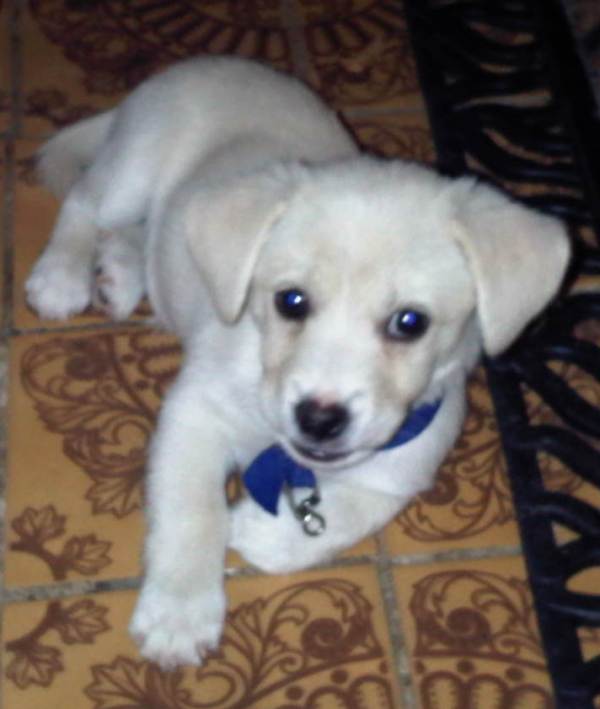
Latest pet arrival
Founder of the Barbados Labour Part (BLP) Sir Grantley Adams

Died November 28, 1971 at the age of 73
Founder of the Democratic Labour Party (DLP), Sir Errol Walton Barrow

Died June 1987 at the age of 67
Hello Sweden

Royal Wedding Cake for Prince William and Kate Middleton

Limerick Poems


Follow Me

Map of Quaking Earth

(For the period: January 2010 - March 7, 2010) We cannot stop earthquakes but we can reduced the death rate.
Centre Piece

Yellow Candles
Ohio Sunrise July 6, 2007
